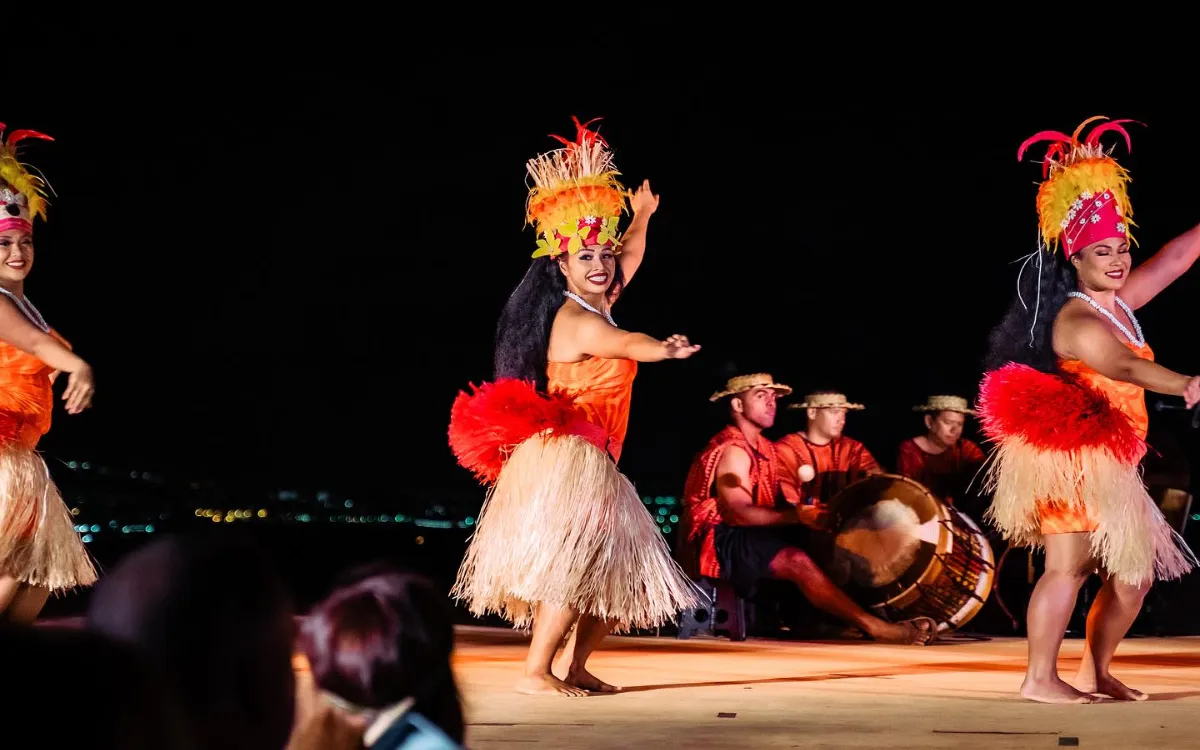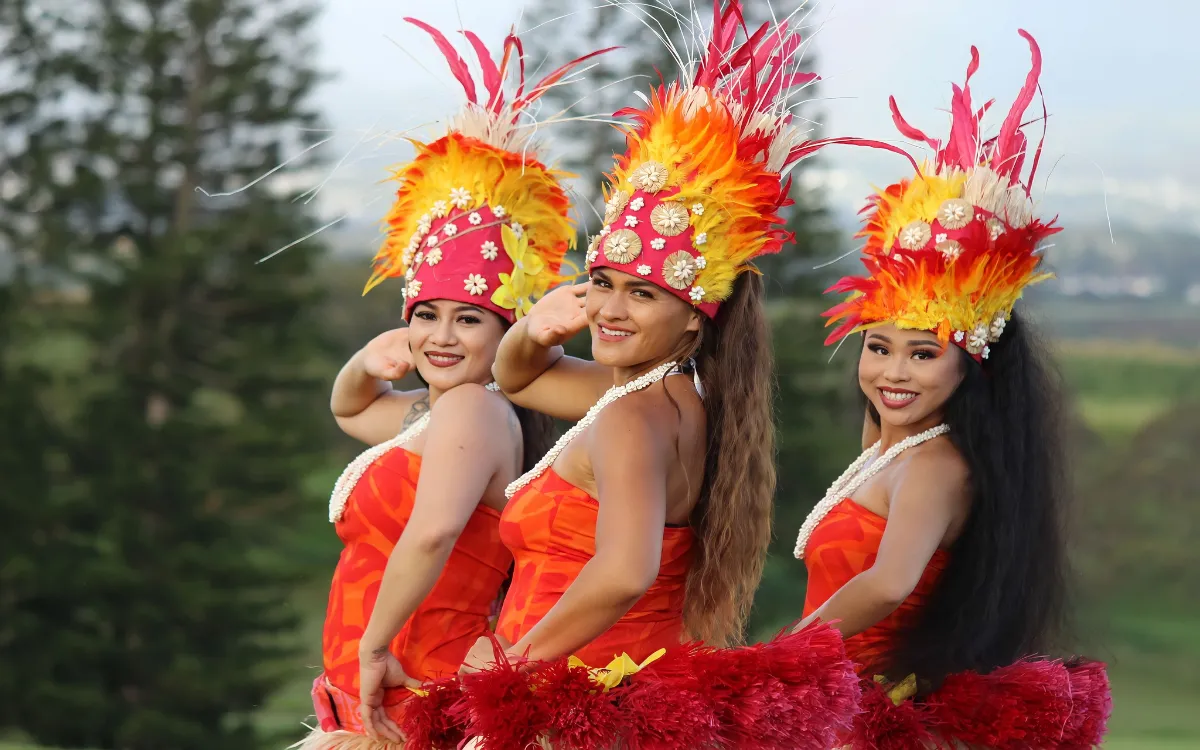


Discover Mauka Warriors Luau at Coral Crater, a one-of-a-kind Hawaiian cultural celebration in the lush forests of Kapolei where the warrior spirit of Mauka rises brightly once again.
There's a deeper story to a Hawaiian luau than just the drinks and flower leis. It originally came from a place of powerful energy and a different kind of fire.
Let’s imagine: a vast, dark ocean stretching from New Zealand to Easter Island and up to Hawaii. This great Polynesian Triangle wasn't just a paradise of beaches; it was a world carved out by the stars, the sea, and its warriors. These islanders, the ancestors weren't just sailors and farmers. They were guardians of honor, protectors of their ohana (family), and keepers of their mana: the sacred, spiritual power that flows through all living things.
Their battles weren't for gold or conquest. They fought for survival, for pride, and to protect that mana. This is the heart of the Polynesian Warrior Legends.
That raw, powerful spirit didn't just vanish into history. It’s too loud to be silenced, too bright to be forgotten. It’s captured, preserved, and unleashed in the thunder of drums, the power of the chant, and the blazing spin of a fire-knife. This is the story told at the Mauka Warriors Luau. It’s more than just a spectacular show. It's a journey back in time, a living history lesson that honors the very legends who first tamed this great ocean. Get ready to meet the real warriors of Polynesia.
Behind Polynesian Warrior Legends: Mana, Gods, and Sacred Duty
To truly understand the Polynesian Warrior Legends, we have to look past the flashing spears and the intimidating tattoos. The first, most crucial lesson is this: the Polynesian warrior was not simply a soldier fighting for territory. He was a spiritual guardian, and his actions were deeply intertwined with the sacred systems that governed his world.
The single most important concept in all of Polynesia is mana.
Mana is a difficult word to translate directly, but it’s the heart of the warrior’s motivation. It’s not just "power" or "luck." Mana is a life force, a spiritual essence, and a measure of authority given by the gods. It flows through the land (the ʻāina), the ancestors, and, most importantly, the aliʻi (the chiefs). A chief with strong mana ensured fertile lands, plentiful fish, and victory in battle. A warrior's primary duty, therefore, was not just to protect his chief's body, but to protect his chief's mana and the spiritual well-being of the entire tribe. To fail in battle wasn't just a physical loss, it was a devastating spiritual defeat that diminished the mana of his people.
This sacred duty was sanctioned by the gods themselves. In Hawaii, while there were many gods, warfare was the domain of Kūkaʻilimoku or "Kū, the Snatcher of Islands." Kū was one of the four great gods of the Hawaiian pantheon, and warfare was his sacred ceremony. Battles were not begun impulsively. They required complex rituals, offerings, and prayers conducted at the heiau (temples) dedicated to Kū.
In fact, Kūkaʻilimoku was the personal war god of King Kamehameha I, the legendary chief who famously unified the Hawaiian Islands. Kamehameha's success was seen as proof of his immense mana and the favor of his god. The koa (warriors) who fought for him were not just soldiers in an army, they were participants in a divine ritual, channeling the power of Kū to fulfill a sacred destiny.
This is the history that beats beneath the surface of the Mauka Warriors Luau. When you watch the performers, you are seeing more than a reenactment. You are witnessing a tribute to this profound spirit. The chants, the fierce expressions, and the powerful stances are all echoes of the rituals once used to build mana and honor the gods. The Polynesian Warrior Legends are not myths, they are the histories of men who carried the spiritual fate of their people on their shoulders.
From Battle Cry to Blazing Fire: The Rituals of the Warrior
The Polynesian warrior never entered a fight quietly. The preparations for battle were just as important as the conflict itself and they were a powerful mix of psychological warfare, spiritual ceremony, and a raw display of unified strength. The spectacular performances you see today are the direct descendants of these sacred, intimidating rituals.
Nowhere is this clearer than in Samoa, with the tradition of the Siva Tau. This was not a "dance" in the Western sense, it was a ritual of transformation. Before a battle, warriors would gather to perform this war chant. Through synchronized stomps, percussive body slaps, and a thundering unified chant, they achieved several goals at once. They psychologically prepared themselves, summoning their loto (courage) and calling upon ancestors for protection. They showed their chief absolute unity, a single, terrifying body moving as one. And most famously, they intimidated their enemies, laying bare the strength and discipline they were about to face.
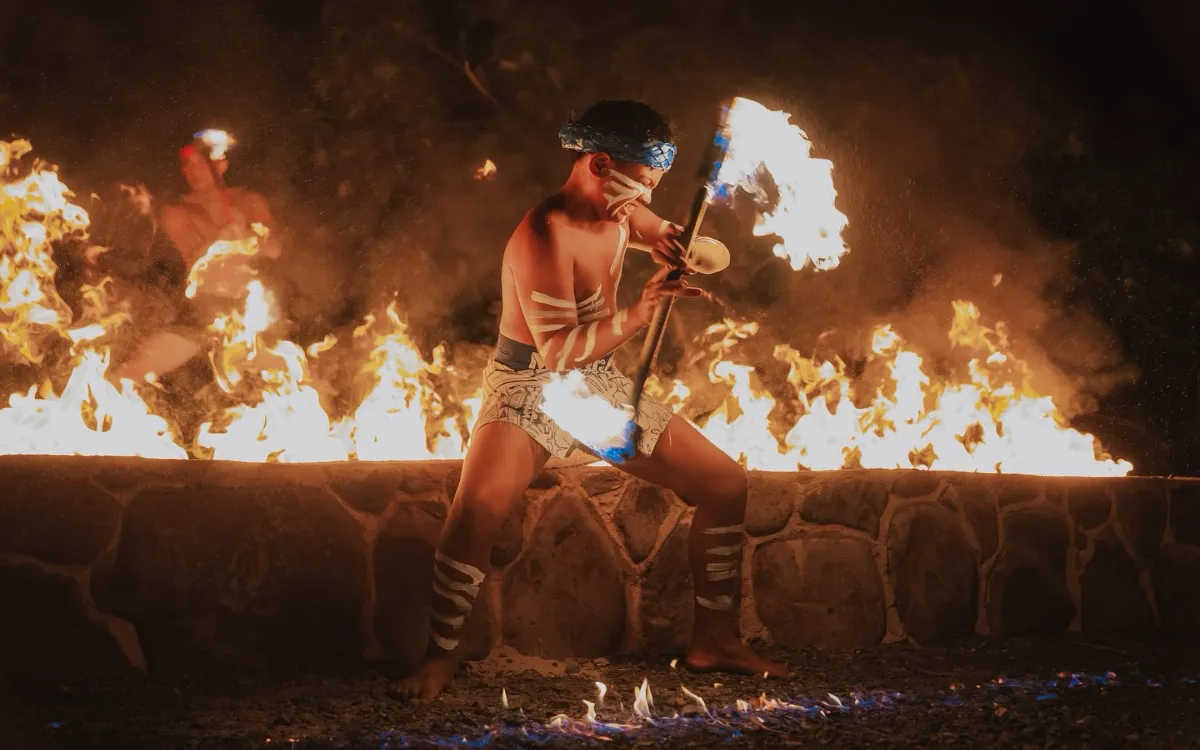
This tradition of displaying a warrior's skill evolved into one of the most iconic parts of the Polynesian Warrior Legends: the Siva Afi, or fire-knife dance. Its modern form was famously pioneered in the 1940s by a Samoan warrior named Freddie Letuli, but it evolved from the ancient ailao, a warrior's display of skill with his nifo oti, or "tooth of death", a bladed war club.
Originally, this was a demonstration of a warrior's dexterity and bravery before the chief. By adding fire, Letuli transformed the ancient display into a stunning spectacle. The blazing knife represents more than just danger; it symbolizes the warrior's total mastery over fear, his agility, and his profound connection to the gods of fire and protection.
This wasn't limited to Samoa. In nearby Tonga and Tahiti, warriors wielded massive, intricately carved clubs (ʻakau) and long spears (tao). Their battles were also preceded by powerful chants and drumming, invoking ancestral spirits to guide their weapons and grant them mana. Even the New Zealand Māori's Haka, the most famous war dance, also follows this same principle: to unite, to intimidate, and to call upon a spiritual power greater than oneself.
When you sit at the Mauka Warriors Luau and the lights go down, the performance you are about to see is not just choreography. As the fire-knives begin to spin against the dark sky, you are witnessing the living legacy of the Siva Afi. That fire is a direct link to the courage of the Polynesian Warrior Legends, a symbol of the mana that still burns brightly across the generations, passed down from the ancient battlefields to the modern stage.
An Unbroken Legacy: How Kamehameha's Kingdom Lives on Stage
The stories of the gods and the rituals of battle are the foundation, but what makes the Polynesian Warrior Legends truly immortal is their outcome. This history isn't just a collection of ancient, disconnected tales; it's a story that builds to a climax, and that climax is the birth of a nation. The greatest of all Hawaiian warrior legends is the man who ended the wars: King Kamehameha I.
For centuries, the Hawaiian Islands were locked in a cycle of fierce, inter-island conflict. Rival chiefs (aliʻi) battled constantly to protect their territory and expand their mana. It was a time of brilliant strategy but also brutal chaos. Kamehameha, then a chief from the island of Hawaiʻi, rose with a singular vision. Guided by his war god Kūkaʻilimoku and a powerful prophecy, he set out to do what no one had ever done: unite all the islands under a single ruler.
This was not a simple task. It was a decades-long campaign that showcased the peak of the Hawaiian warrior tradition. Kamehameha was a master strategist, combining the ferocious skill of his traditional koa warriors with the new, devastating power of Western cannons and firearms acquired from foreign sailors. His campaign culminated in legendary battles, like the Battle of Kepaniwai on Maui, where his cannons famously "dammed" a river, and the Battle of Nuʻuanu Pali on Oʻahu, where he drove the opposing army over a 1,000-foot cliff.
By 1810, through a masterful combination of warfare, diplomacy, and strategic alliance, Kamehameha the Great achieved his goal. He established the unified Kingdom of Hawaii, ending the centuries of internal conflict and forging a new, collective Hawaiian identity.
So, what happens to the warrior spirit when the wars are over? It doesn't vanish, it transforms.
The warrior's role evolved from being a protector of the chief to being a guardian of history. The chants (mele) and dances (hula) that once prepared men for battle or celebrated a victory became the sacred vessels for this new, unified legacy. The stories of Kū, of the great migrations, and of Kamehameha's victories now had to be preserved, not just for one tribe, but for the entire Kingdom.
This is the profound responsibility that the Mauka Warriors Luau inherits. What you witness on their stage is not just a random collection of "Polynesian dances." It is a living, breathing archive. It's a direct line back to the storytellers who kept these legends alive. When the performers at the Mauka Warriors Luau retell these stories, they are fulfilling the same sacred duty as the storytellers who came before them: to honor the ancestors and pass their mana to the next generation. The fire-knife, the thundering drums, and the powerful chants are the pulse of the Polynesian Warrior Legends, an unbroken heartbeat connecting the ancient battlefields to the modern stage.
Mauka Warriors Luau: Why This Is an Experience, Not Just a Show
Let's be honest: you can find a luau on almost any corner in Hawaii. Many offer a lovely buffet and a beautiful, gentle hula performance. But the Mauka Warriors Luau is built on an entirely different foundation. It is not a passive dinner show, it is an active, sensory immersion.
This is where the history we've talked about: the mana, the rituals, the legacy of Kamehameha leaps off the pages of history and becomes something you can feel. You don't just watch the Polynesian Warrior Legends; you are invited into their circle.
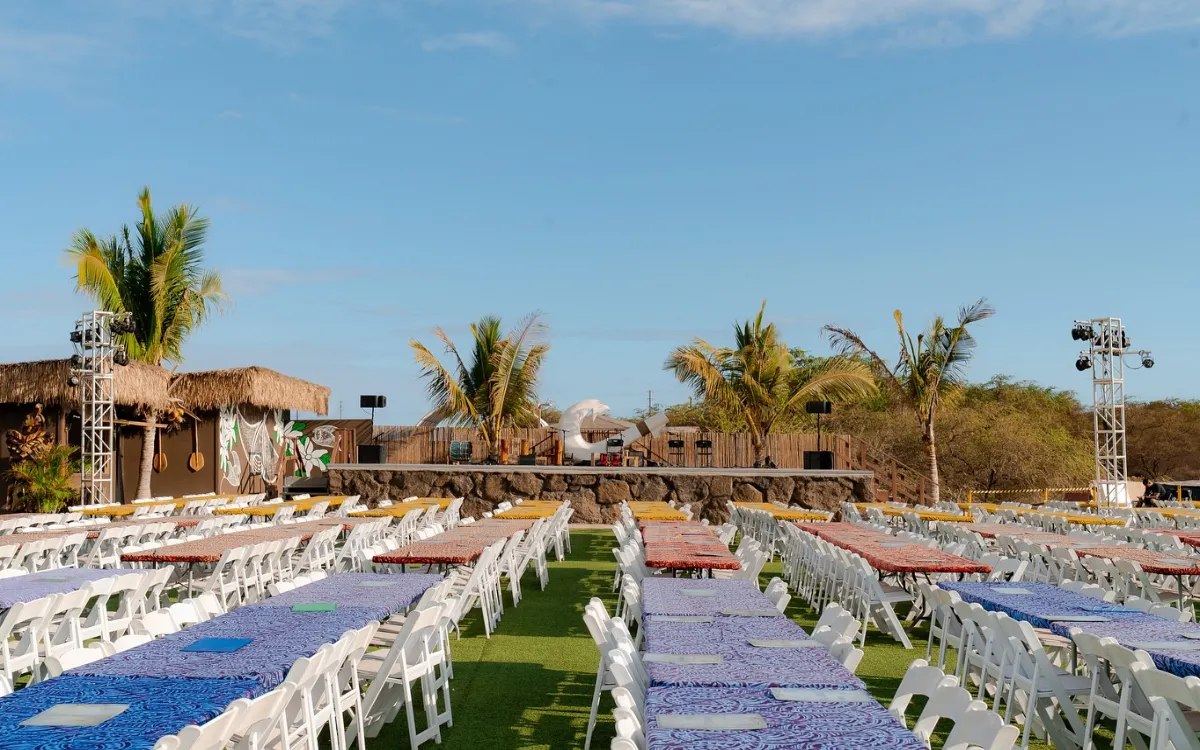
What does that mean? It means feeling the aina (the land) beneath your feet in a stunning, open-air setting, not just sitting in a banquet hall. It means when the drums start, you don't just hear them; you feel the pahu drumbeat vibrating in your chest. When the kāhea (the chant) calls out, it feels less like a performance and more like a summons, welcoming you to share in the energy.
This is the crucial difference. Other luaus celebrate the undeniable spirit of aloha. But the Mauka Warriors Luau is one of the few places that truly honors the warrior spirit: the fierce, powerful, and protective soul of Polynesia. When that Siva Afi (fire-knife) dancer takes the stage, you will feel the heat. You will see the focus. You will witness that raw, authentic connection to the ancestors.
You can get a meal anywhere. You can watch a dance from a distance. But to stand in the presence of this power, to be treated not just as an audience member but as an honored guest in a living ceremony? That is an unforgettable experience. It’s the difference between being a tourist and becoming a witness to the true legacy.
Book your tickets now and prepare for an unforgettable experience at Mauka Warriors Luau!